what to expect at your feeding therapy appointment
A calm, supportive, and hands-on experience designed to help you understand your baby’s feeding and feel confident moving forward.
Before Your Appointment

Helpful things to bring:
Your baby, ready to feed (hungry, but not overly upset)
Bottles, nipples, or other feeding tools you are currently using
Soothers (if currently using)
A blanket or anything that helps your baby feel comfortable
You don’t need to prepare anything complicated - just come as you are.
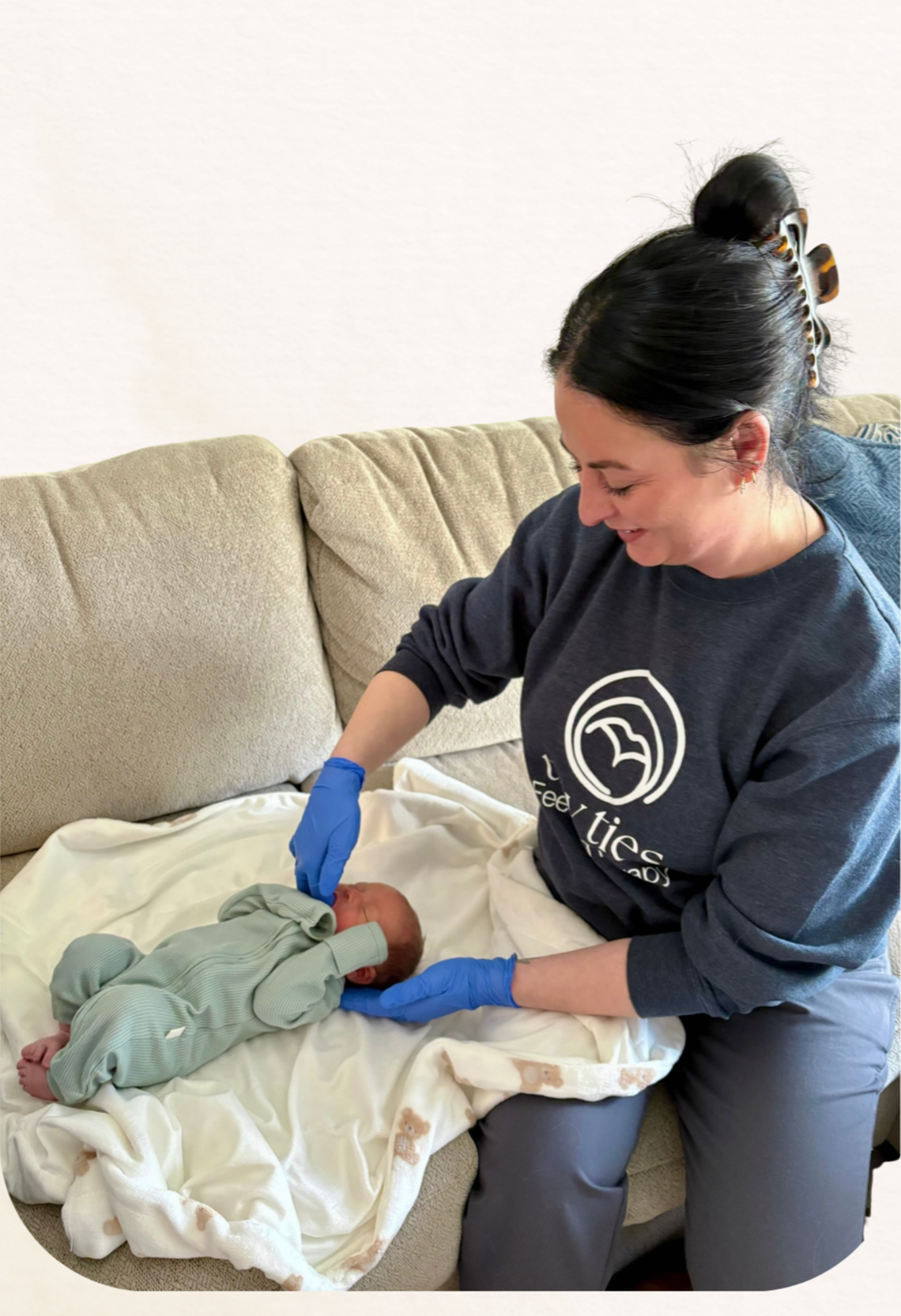
During Your Assessment
Your initial appointment is a comprehensive, in-person feeding assessment.
We’ll start with a conversation about your baby’s history, your feeding experience, and your goals.
From there, your baby’s feeding and oral function will be assessed in a supportive, baby-led way.
Your session may include:
Review of feeding history and concerns
Oral motor assessment (lips, tongue, jaw, coordination)
Observation of breastfeeding and/or bottle feeding
Assessment of latch, positioning, and efficiency
Evaluation of suck–swallow–breathe coordination
Hands-On Support

This is not just an assessment. You will receive real-time, hands-on guidance during your session. This may include:
Adjusting positioning
Supporting latch or bottle feeding
Trying small changes and seeing how your baby responds
The goal is for you to leave with strategies that feel practical and doable.
If Tongue or Lip Ties Are Suspected

If a tongue or lip tie is suspected, this will be discussed as part of your baby’s overall feeding function.
Because services are provided within Dr. Appleton’s office, this allows for:
Coordinated care when needed
Communication with the medical team
Support before and after any procedures
You will never feel pressured - decisions are always collaborative and based on your baby’s needs.
After Your Appointment

You’ll leave your session with a clear understanding of what’s going on and what to do next. You’ll receive:
A personalized feeding plan
Specific strategies to use at home
Recommendations for follow-up, if needed
The focus is on helping you feel confident and supported between visits.
Follow-Up Support

Some families need only one visit, while others benefit from follow-up sessions to continue building progress. Follow-ups may focus on:
Refining feeding strategies
Improving efficiency and coordination
Supporting transitions (bottle, solids, etc.)
Integrating myofunctional therapy techniques when appropriate
If feeding has been feeling difficult or stressful, you don’t have to navigate it alone.
With the right support, feeding can become more comfortable, efficient, and enjoyable.